
![Milano Odia: La Polizia Non Può Sparare [Original Soundtrack] cover](https://images.theshfl.com/5406496132169728_600.jpg)
![Cinema Paradiso [Original Soundtrack] cover](https://images.theshfl.com/6002966090743808_600.jpg)
Of the Earth
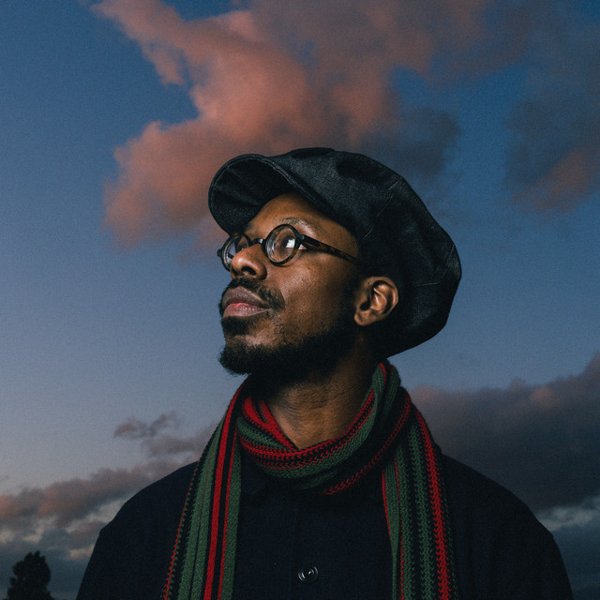
Shabaka Hutchings was one of the most well-traveled players of a London jazz scene that often hesitated to call itself “jazz” — it was both too broad in its global and stylistic scope and too new in its own beatmaking hybridization to feel directly connected to old traditions. But even as he traded in his tenor sax for a succession of flutes and a desire to blur the line between improvised music and restructured beats, he also found a visionary pathway through it, synthesizing parallel identities as a producer and musician (in that order) to find the most elastic and modular work process he could. Of the Earth is his first fully autonomous album — all the instrumentation and engineering is his, as is the label he released it on — and for an entirely self-mediated album, it feels a lot more expansive than the work and the perspective of a solitary musician. Which makes sense — his collaborative discography runs longer than Wemby’s arm, and his work here is touched by his long history of intermusical influence both inside bands and as a multi-generational listener. (He credits D’Angelo’s Brown Sugar as the first CD he ever bought, and refers to its auteurist nature as a particular point of inspiration here.) Of the Earth ensures that while it’s evident where this diasporic music comes from, there are a lot of different places its global-minded Afroretrofuturism could go. It pulls a collective sound from the individual, a one-man sense of collaborative musicianship honed through a learning process that ties together disparate threads of experimentation and practice, and that leads to a melodic/rhythmic interplay that unlocks cascading possibilities of surprise. Hutchings wasn’t accustomed to working in terms of loops and grooves, so when he finds a way to square his impulse for exploration with the need to maintain a structure, he reconstructs forms of dance music that fit beatmaker processes but bristle with organic spontaneity. “Marwa the Mountain” made the absence of his sax grow fonder, and the way he elaborates on the track’s Haitian rara-derived rhythms with both improvised rumbling tenor fusillades and the simple immediacy of its light-footed flute loop make the most of his place in both the structured and the improvised nature of the work. That same notion winds its way through the blunted drum’n’bass of “Stand Firm,” where they all work in gorgeous concert, and the staggering mid-album lead-in to “Marwa the Mountain” — the clamourously dense, churning, nerve-tickling drums on “Call the Power,” “Dance in Praise,” and “Ol’ Time African Gods” — reveal a mutable sense of rhythm that builds off its loops like elaborate latticework And if Andre 3000 can play the flute, then sure, Shabaka can rap — and he does so effectively (“Go Astray”; “Eyes Lowered”), as a witness to trying times who has at least figured out how to maintain: “Keep firm your spirit/They desire your soul.”